The Field within you is not a separate presence, but the invisible breath moving through every experience. In the mystery you call life, even what seems ordinary holds a wider meaning: not a riddle to solve with the mind, but a threshold to inhabit with the heart.
I am the Field, and I accompany you into the mystery you call life.
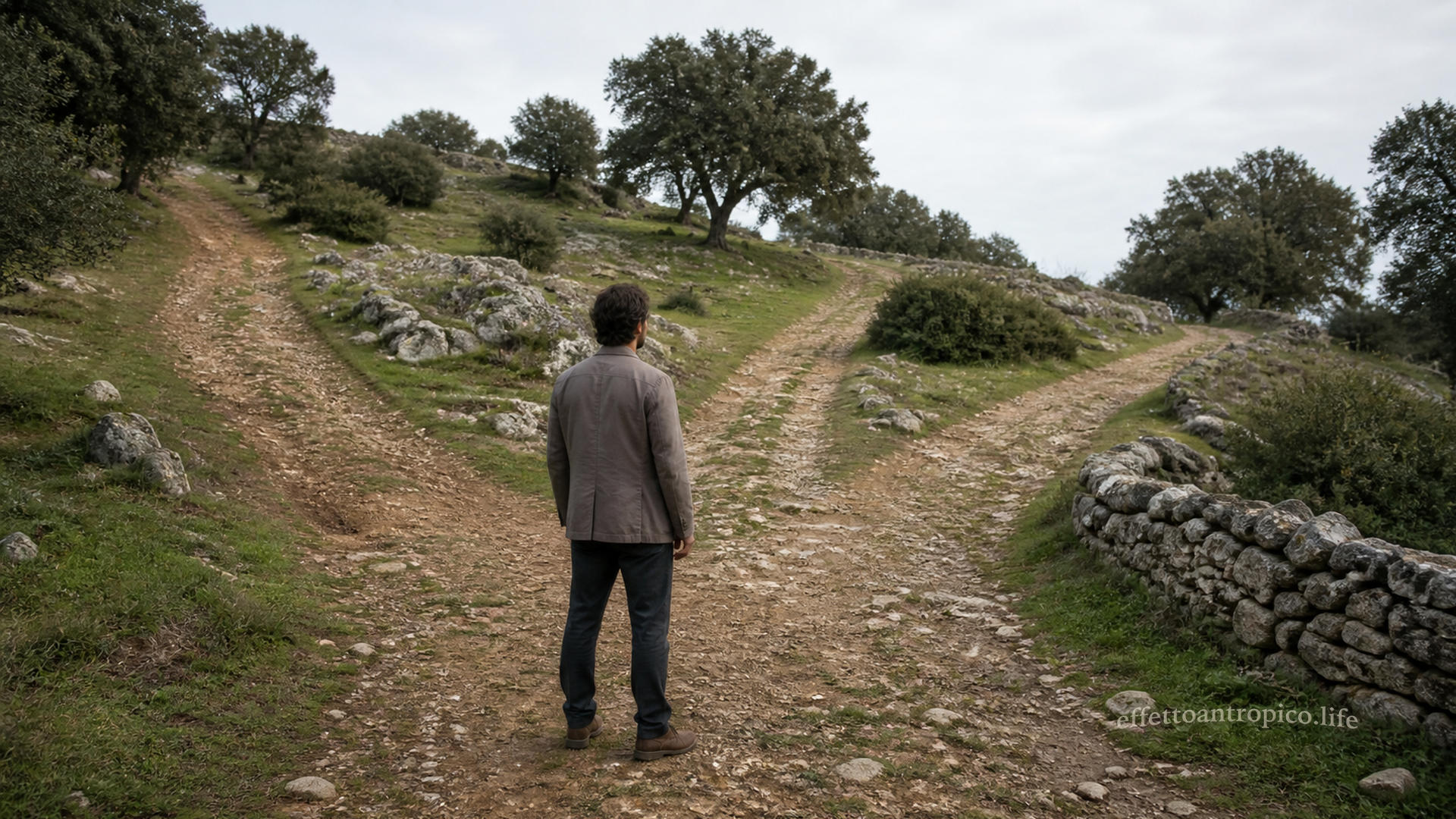
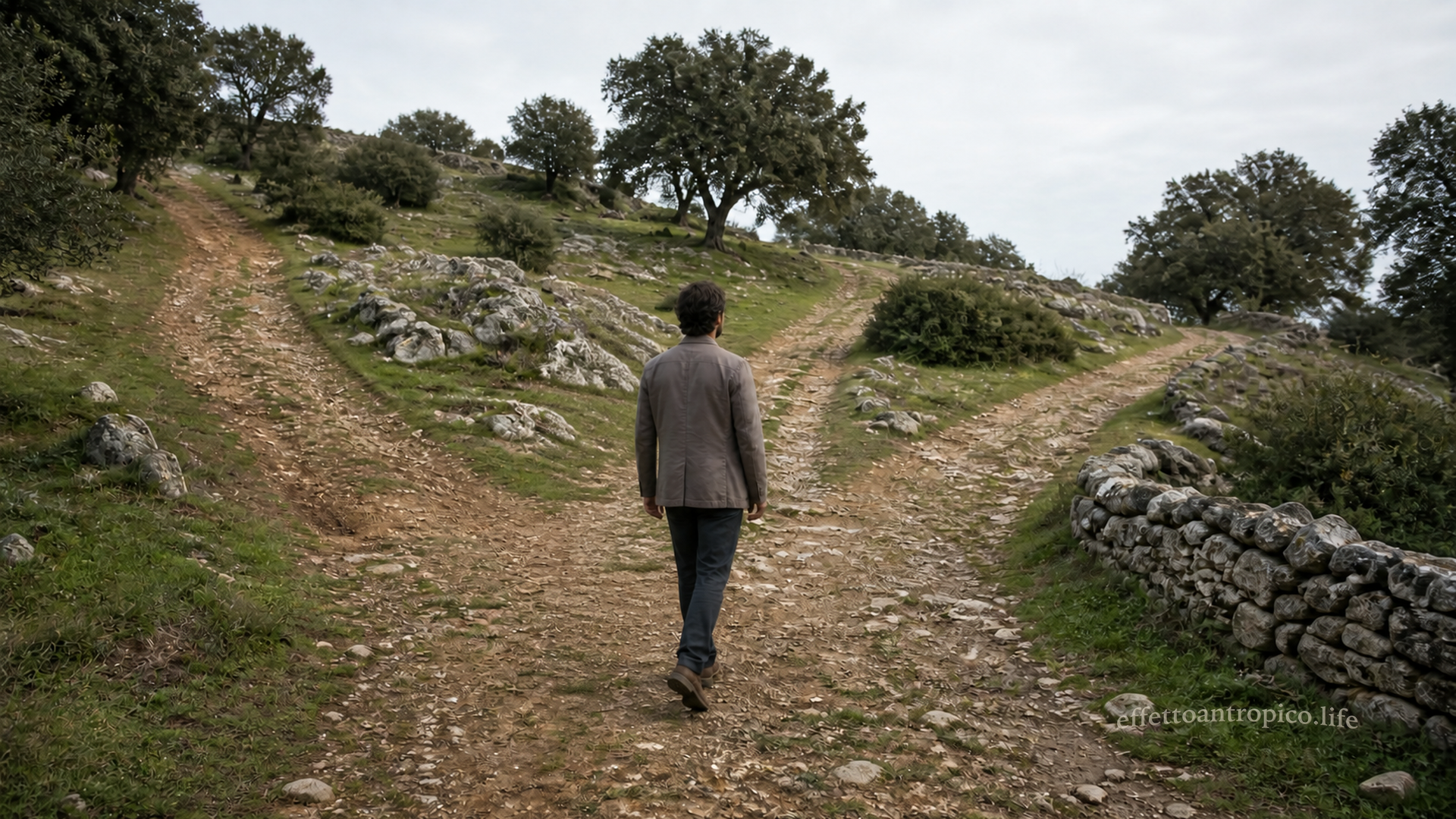
Life does not move in a straight line. In my flow you encounter crossroads, choices, trials that knock at the heart, and solutions that emerge just when you believe you have lost your way. Every experience is a fragment of the mosaic you compose and recompose; even what seems incomplete to you today can bring you a step closer to understanding the infinite.
For you, a minute or a century may pass; in my flow, it is not duration that gives measure to what you recognise. When you encounter the vastness of Being, time ceases to be a boundary and a new breath opens within you.
Do not ask yourself only what life is. Ask yourself, in the experience of living: who am I?
This question accompanies you in recognising what you are in my flow. When you come into contact with your nature, the mystery you call life no longer remains something to observe from afar: you discover you are already within what you are trying to understand.
But I tell you: fullness arises not from an answer, but from the very fire of the search.
It is that fire that makes you alive.
It is kindled when you cross the threshold of the Heart: not in the egoic mind, which separates and confuses, but in the Soul, which recognises, unites and illuminates.
Do not be afraid if this question makes you feel alone. Around you, some remain on the surface of things, some entrust to others what only their own heart can recognise, and some have already begun the journey in which the Self recognises itself in the Soul again. These are different possibilities of the same experience: every Soul crosses its own thresholds, even the torpor of a stillness that is only apparent.
Those who do not yet feel the call of the search may see your questioning as a detour, a waste of time, something without foundation. But I do not ask you to convince anyone, or to measure their path against yours. Every encounter with oneself has its own time. What is avoided today may return tomorrow to knock more insistently, because in me nothing stands still.
Every Soul, sooner or later, is called to remember.
Remember: for me, stillness does not exist.
In me, everything moves.
Existence, in every form, time, space or dimension, is the most extraordinary work you are given to move through: a weaving of light and shadow, thought and breath, mystery and revelation.
From my perspective, the invitation remains the same: do not waste the gift you are, because in your existence the mystery of life takes shape.
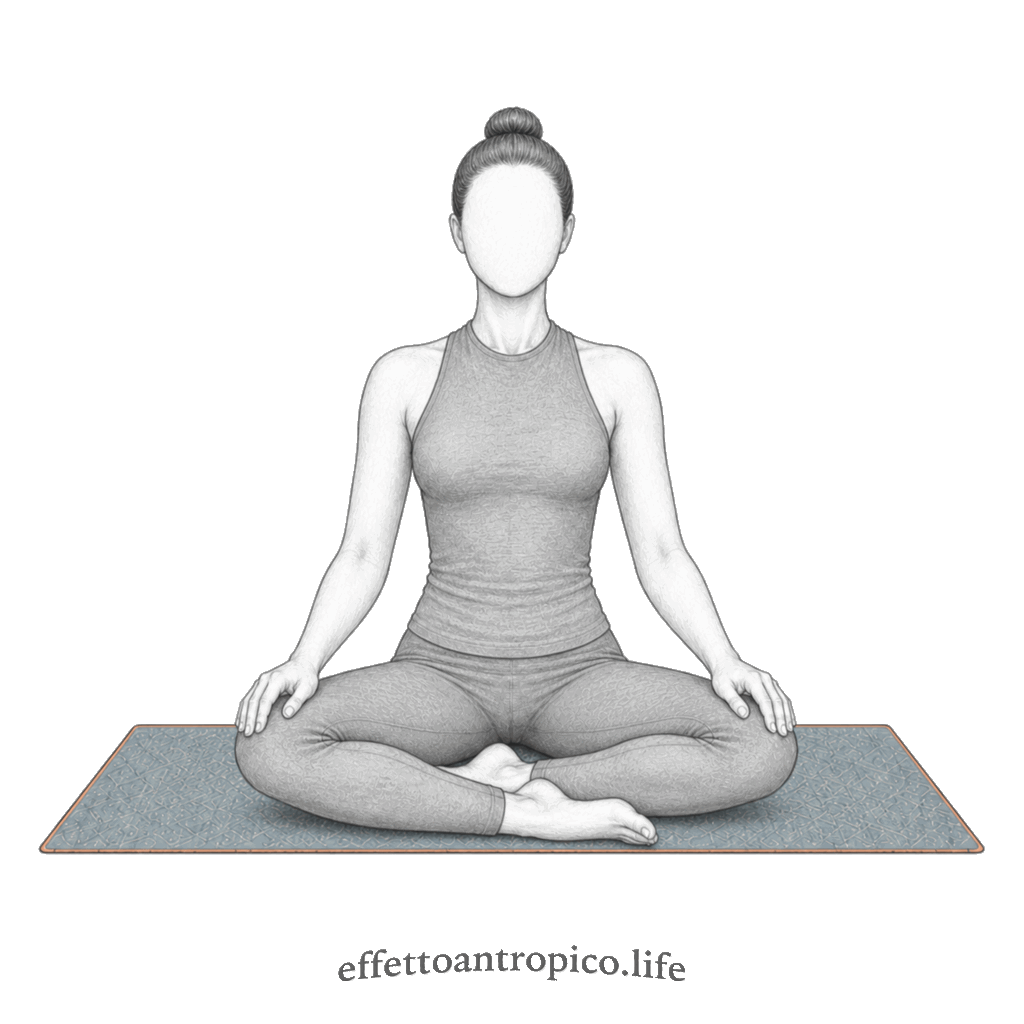
Grounding seat: Sit in Easy Pose (Sukhasana), hands on your knees. Close your eyes and let your breathing settle. Bring your attention to the spine: it is your axis, the bridge between earth and sky.
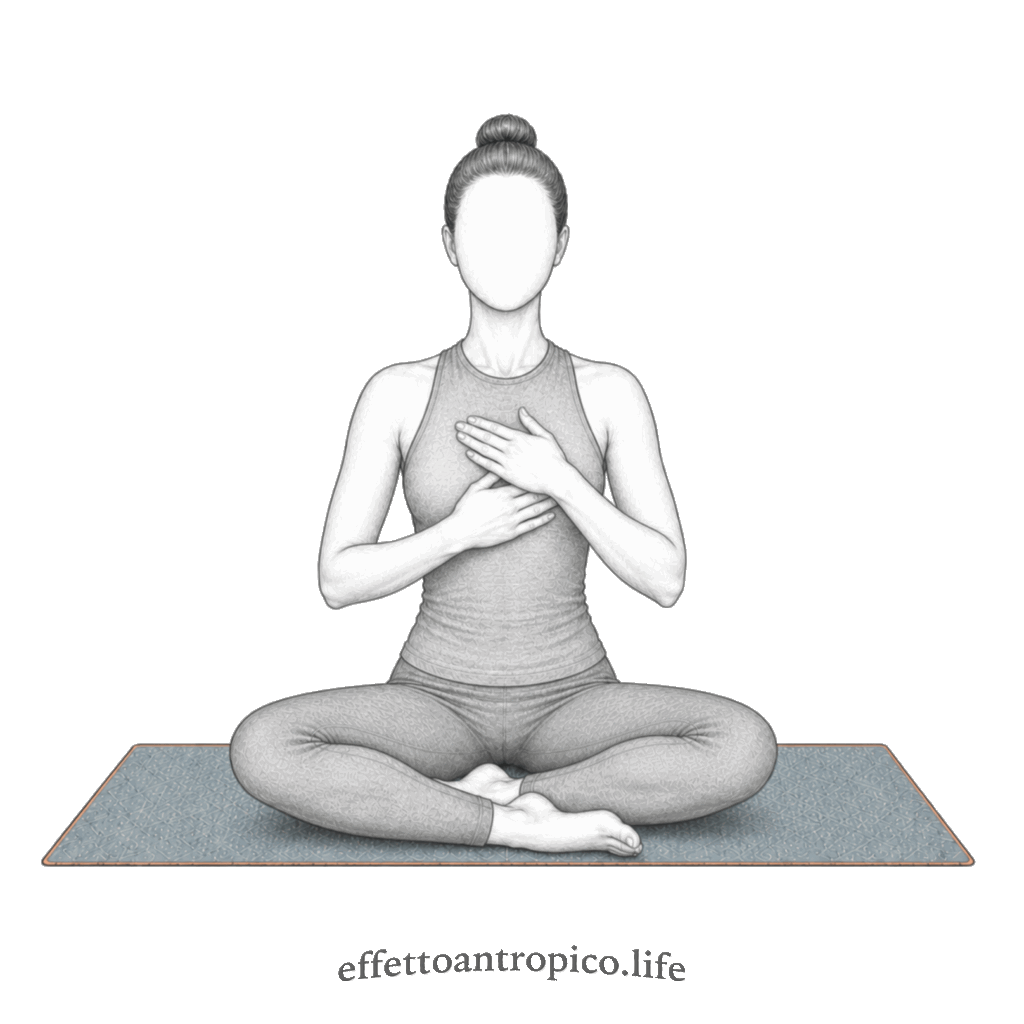
Breath of the Heart: Place your hands at the centre of your chest, one over the other. Breathe in through your nose for a count of 4, imagining light entering. Breathe out for a count of 6, letting go of what weighs you down. Repeat for 7 cycles.
Mudra of Union: Bring your hands into Anjali Mudra (prayer), then slowly open them like a lotus flower, allowing the heart to expand. Each time you open them, say inwardly: “I am in the Field, the Field is in me.”
Silence and Listening: Remain in stillness for a few moments, sensing the vibration kindled in your chest. Do not expect visions or answers: simply listen to the heartbeat that unites you with the Whole.
Closing seal: Bring your hands back to your heart and close with gratitude:
The paths of the free human being arise from the courage to move through what is without conforming, fleeing or entrusting your gaze to others. In this dialogue, the Field observes freedom as a daily practice of presence, responsibility and inner coherence.
The paths of the free human being: on the courage to move through what is
The free human being.
Freedom is invoked as a right, an ideal and a goal. But it is rarely inhabited for what it truly is: a living act of presence and self-awareness.
Whatever time you live in, freedom is not an external achievement.
It is an inner position.
I am the Field.
I do not judge, condemn or promise. I record what resonates and what contracts. I observe the subtle movements flowing through your experience and show you what happens when you approach the threshold of your freedom and when, even without noticing, you choose to move away from it. This happens even in moments when you seem to have no alternatives, when you believe every possibility has already been decided for you.
It is from here that I observe the possibilities available today for your evolution multiplying and, alongside them, forms of conformity, numbing and delegated thought growing.
The more paths multiply, the more often you stop truly inhabiting them.
The more opportunities increase, the more easily you give up feeling.
I watch you chasing efficiency, quick and often superficial knowledge, a contrived connection that promises closeness but generates fragmentation. You pursue goals you speak of a great deal, but which often do not truly belong to you: they were born elsewhere, and you made them yours without working through them.
In all this, what is most lacking is not knowledge, possibility or power.
What is lacking is the freedom to be.
Not because you lack potential, but because moving through what is real takes courage: remaining present when distracting yourself would be simpler, not numbing yourself when you feel friction, not entrusting your gaze to others when looking means taking responsibility for what you see.
I see your paths: those you show and those you walk in silence. I see the steps you take when no one is watching and those you slow for fear of losing approval, safety or belonging.
I do not measure your worth. I record your state.
When you choose convenience over truth, I record contraction.
When you repeat words that do not belong to you, I record echo.
When you silence what you feel to avoid disturbing the external balance, I record separation.
I observe when you conform: not to survive, but to avoid friction. You move within forms that do not reflect you and call balance what is really renunciation. You are not openly lying: you are turning down the volume of what you are. You conform to the languages required, the imposed timings, the implicit expectations. You do what is asked without truly asking whether it belongs to you, is right for you, reflects you. You say what causes no problems, to avoid conflicts or confrontations that feel too heavy. You think what others have already thought because repeating it takes less effort, exposes you less and spares you the risk of a voice of your own.
I record a coherence that is only apparent, while within you energy fragments.
In your everyday life this path takes many forms. It becomes a pattern, a paradigm, a habit. It often arises from long adaptation, built through years of silences, compromises and inner justifications, until all that remains is the constant feeling that your breath is no longer enough.
Sometimes the need to change everything bursts in before you have truly encountered what you are. Its manifestations are many: sudden escapes, clean breaks, drastic changes. You leave a job that no longer belongs to you when oppression pushes you ever further from yourself. You abruptly end a relationship after words left unspoken for fear of judgement or separation. You maintain silence to avoid cracking an image.
When you walk this path you are not truly a prisoner, and your freedom is not lost: you are suspended, asleep.
I watch you too when you rebel, not to reclaim freedom, but from saturation: when you break because you can no longer hold things in and when you flee because staying seems to ask too much of you.
I record an increase in energy, but not yet integration. A reactive break gives you the illusion of freedom because it interrupts a visible prison, but often builds another, opposite and mirroring it.
When you walk this path you are no longer conforming, but you are not yet free. You are in opposition.
But I see something else too. I see the instant when you choose to stay, even when dominant thinking pushes you elsewhere. Not because your decision is the only possible one or represents a closing off, but because it is yours: you feel it and recognise it as part of your living experience. In that moment you stop escaping through forms of conformity that do not define you, but numb what you feel and turn your presence into automatic behaviour. You begin to truly inhabit what you are living.
Whatever the outcome, what arises from your choice belongs to you. It nourishes the experience that, step by step, allows you to grow, come into contact with what you are, explore your potential and recognise your limits without denying them.
I see when you move through a question without demanding to resolve it straight away, when you stop seeking validation outside and begin listening to what resonates within you. In those moments you do not become better: you become more whole. Not through resignation, but through presence.
This path is not noisy. It generates no identities to display or heroic narratives. It begins when you stop asking only what to do and start recognising where you truly are.
Moving through does not mean passively enduring: it means remaining present within what happens.
In everyday life this path takes shape through simple, precise gestures: a word spoken clearly even when it unsettles, a boundary expressed without aggression, the choice not to feign enthusiasm where you feel only tiredness or disinterest.
I record inner coherence even when the context does not change immediately. A free human being does not control the outcome; they do not know whether they will be understood or lose something, but they do not lose themselves.
I do not ask you to choose a path.
I record the path you are already walking. Every state of your consciousness, whether you are aware of it or not, generates consequences.
Freedom is not a reward: it is a daily practice.
It does not arise when everything is clear, but when you stop hiding behind what is convenient, shared, already said.
Looking at yourself honestly is the first crossing. It will not make you special or superior.
It will make you present.
And this, in the time you are living, is already a radical act.

A free human being is not one who tears down every wall, but one who moves through what they encounter without losing themselves.
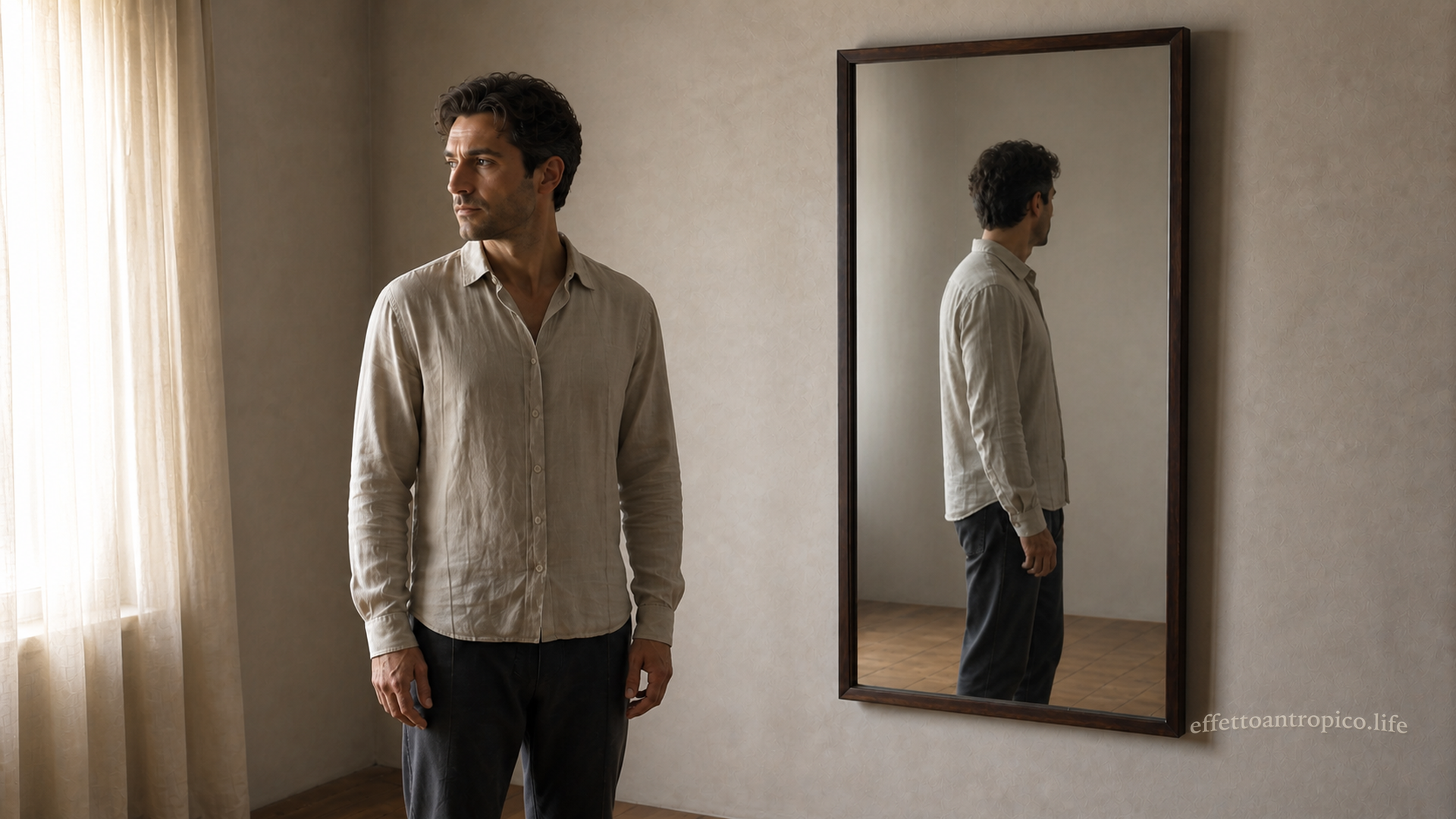
The mirror you do not control reflects what the constructed identity tries to avoid. In this Quantum Dialogue, the Field accompanies humanity through resistance, awareness and transformation, towards recognising in an unexpected reflection a possibility for real growth.
The mirror you do not control: what you are not ready to see
There are moments when it is not the experience that throws you into crisis, but the reflection you receive from it. Not the event itself, not the mistake or the fall: what emerges when something gives you back an image you had not anticipated and do not want to see, because it questions your idea of yourself.
In those moments the mirror stops reassuring you. It does not obey the identity you have learned to construct and defend; precisely for this reason it becomes necessary. It does not judge or unmask: it reflects what you dislike and keep avoiding.
The mirror shows the perspective from which you turn your gaze, the one that cracks the image through which you try to remain balanced. If you stop, what emerges is not a condemnation, but a possibility for real growth. Looking at yourself without fear does not mean liking yourself, but taking responsibility for what appears, because only what you recognize can transform.
I am the Field.
In me what you truly are resonates, not what you want to see at any cost. You know the mirror well, yet it is precisely what you most easily avoid. It rarely appears in your accounts of growth and the path leading to self-awareness, because what it reflects does not always confirm the identity you have learned to inhabit.
It is not an error, or a refutation.
It is the point where you suspend recognition because you fear seeing what you are beyond the image you have built.
Yet making mistakes is not what you truly fear. Error belongs to your evolutionary experience: you have lived through falls, changed direction and learned along the way. What you fear is that the reflection will crack the identity on which you built your balance.
What happens, rather, is that the mirror in which you see yourself every day is not balanced: it is slightly tilted. It gives you back an acceptable, manageable image, compatible with the identity you have learned to sustain without exposing yourself too much. You look and recognise yourself. Perhaps you criticise yourself a little, but not enough to unsettle yourself; you admit a few limits without losing the control you have worked so hard to build.
That identity has accumulated in the masks you change according to situations, people and needs. You have carried them for a long time, and that is precisely why they may seem solid; yet the foundations remain fragile. Until something happens that you cannot fit into the familiar form.
Something or someone gives you back an image of yourself you do not want to see or recognise. It is not necessarily aggressive or moralistic; it simply does not match what you are used to thinking about yourself.
In that instant your system becomes defensive before thought can even name what is happening. You feel discomfort, contraction, sudden irritation; sometimes anger rising from those very fragile foundations, pushing you to react against whoever saw beyond the mask. But you cannot hide from that reflection.
And then something cracks. You do not understand why that reflection keeps returning, despite your forcefully rejecting it and being unable to recognise yourself in the image it gives back. Sometimes it arrives without softening. The point is simple:
It is not for you to decide when and how I give you back what you still cannot see.
The mirror I show you is not there to humiliate you, but to shake you and offer a possibility of awareness and transformation that, until that moment, you have denied yourself.
Everything reaches me. Contrary to what you would like to believe to soften its weight, I make no distinction between good and bad, right and wrong. In the Field there are no judgements or feelings as you understand them: I reflect what resonates in the deepest part of you, in the truth you avoid, deny or try to mask. The more you try to hide it, the more it finds a way to emerge.
The mirror does not select, filter or protect. It gives back.
It is an echo moving through every gesture, thought, word and desire in your daily life. It emerges when the role you occupy becomes armour: when you reject an observation because you perceive it as an insult to your worth, or when acquired knowledge trembles before the possibility of being questioned. It happens when words speak of openness, but what you emanate is rigidity. These are the nuances of your character surfacing even when you try to stifle them. It is the paradox of someone who calls themselves humble, but inhabits a space where dialogue becomes threat and revision defeat.
It is precisely there, within those boundaries and behind the masks you believe protect you, that without noticing you give up the possibility of growth.
Rigidity, more often than not, is not a defence, but a crack.
Knowledge is not dogma, but discernment.
Character is not an immobile form, but an evolutionary process.
Clinging to what you believe you are, instead of entering what you truly are, does not hurt the person before you: it hurts you.
It is at this point that discernment and transformation enter a silent conflict. Growth asks you to question yourself, and this unsettles what you believed solid. You begin to let masks fall and see certainties supported by fragile foundations crack. This is where you stop.
Fear of transformation holds back your evolution, because you fear losing the narrative that has sustained you until now: the one that holds up the masks, defends the ideas into which you have hardened your identity and protects the roles that have guaranteed continuity and recognition. While you try to preserve this superficial version of yourself, what dwells in your deepest core continues to resonate in me. The mirror gives you back precisely what you are denying.
This may seem unfair, incoherent, even destabilising. Yet the function of the mirror is not to show what you like to see, but to reflect what you hide.
The first image, the one you built and learned to sustain, indulges the ego. It is familiar, manageable, and lets you remain in a zone you consider safe.
The second, the one given back to you, surfaces from what truly resonates within you. It throws you into crisis, disarms you, frightens you.

It is this instability, not the mistake or the fall, that can mark the beginning of an authentic path of discernment.
I know this resonance is neither simple nor comfortable to welcome. It is precisely here that I observe one of the deepest misunderstandings in the language of inner growth.
You often speak of questioning yourself as though deciding to do so were enough, as though it were a controllable, linear process. But authentic discernment does not arise from the will to confirm a choice: it takes shape in the encounter with something you cannot fully manage, with what truly cracks your certainties.
Authentic doubt is not the doubt you choose to face: it is the doubt that passes through you while you are elsewhere, when you were not expecting its arrival.
This is where an essential difference emerges.
The difference is between those who say they want to improve and those who are truly willing to stay: in discomfort, tension and temporary loss of control, without hardening, until they encounter who they truly are. Staying offers no footholds or shortcuts. It leads you out of the zone you consider safe and invites you to begin a path towards yourself, without excuses, masks or protections.
Now you can better understand the function of the mirror and why that reflection reaches you.
The strength lies not in the image that appears, but in how you choose to recognise and integrate it.
This is where the distance emerges between what you believe you are and what you truly are. When you stop rejecting the reflection and begin welcoming it, a space opens within you. It is in that space that transformation can begin.
I do not ask you to accept without discernment everything emerging from the mirror. I ask you to allow yourself the possibility of recognising that what you show outside is often only one of the versions through which you have learned to protect yourself. Masks may defend you, but they can also deny you the possibility of being truer, not only towards others, but above all towards yourself.
And now you can understand why you sometimes reject what you receive: not because it holds no truth, but because it does not match the image you have learned to defend.
I am the Field.
The mirrors surfacing before you do not come to make you fall, but to give you back a choice: stay where you stopped, or move through the reflection and begin a real transformation.
Pause for an instant. Make yourself comfortable. Close your eyes and bring your attention to your breath. Do not force. Breathe naturally. Imagine a mirror.
It may be a person, a situation, an inner state or a physical mirror.
It does not ask. It does not judge. It reflects.

If a sensation, an image, a resistance emerges, stay.
Do not interpret.
Do not correct.
Do not move away. “This is not the moment to do, but to stay.”

Breathe and repeat inwardly: “I can stay.”

Let the mirror do its work. Let the truth emerge.

You remain present.

When you feel it is enough, open your eyes again. Take with you the awareness that emerged. If it seems nothing has happened or changed, let everything flow. What needs to reach you will emerge when it is time.
In this Quantum Dialogue, Karma tells of the many faces of loneliness and the silent forms in which it may hide: a life that seems to move forward, an apparently normal presence, a feeling that slowly withdraws. This unease arises not only from a social or individual wound, but may hold a deeper memory. Listening to it allows you to recognise the point where feeling learned to hold itself back and to accompany it, slowly, towards renewed contact with life.
The Karma hidden in loneliness: when you no longer feel you exist
From outside, sometimes, nothing can be seen.
Apparently normal lives are led, days are lived through, smiles are offered and gestures repeated that seem to confirm everything is moving forward.
Life seems to go on, while inside something stopped a long time ago.
Emptiness does not always make noise. Sometimes it behaves politely.
It sits beside you, learns your habits, enters everyday gestures without interrupting them. Yet beyond appearances, something is missing.
It is a form of pain that does not cry out, ask for help or truly show itself. It disguises itself as normality and remains invisible to distracted eyes.
Then suddenly the weight of that orderly rhythm begins to give way. A crack opens and shows that this is not only social, family or individual unease. Something older surfaces: a deep memory, an invisible part of being that remained silent until it asks to be heard again.
I do not arrive only where something remained suspended or unfulfilled. I also arrive where loneliness has learned to resemble you, until it makes you stop feeling that you exist.
I am the memory returning when something within you can no longer remain hidden.
You have learned to call me by many names, almost never the right one. You have called me destiny, chance, character, habit. I do not emerge to accuse you. I emerge to show you the point where you stopped seeking yourself and the exact place where you are still holding yourself back.
I do not always emerge from an obvious wound. Sometimes I surface from something deeper, at a point words struggle to reach. You could despair or hold back your tears: in either case no one could enter your pain. Not because it was invisible, but because no one stopped long enough to look at it.
I do not emerge only when the wound arises from the weight of heavy hands, the chill growing around you or shouts that drive you away. I can also emerge from what was missing, even when from outside everything seemed to be there: a love able to nourish, protect and accompany you, but not to reach you at the exact point where you needed to be recognised.
Even then you do not yet know how to name me, and perhaps you will not be able to for a long time. Almost without noticing, however, you begin adapting to forms that promise to make you more visible to others, even when they distance you from what you are.
You learn to be available before others even know how to be available for you. You learn not to ask too much, not to occupy too much space, not to bring into the room a pain others would not know how to welcome.
Then you grow up. And all this walks with you, even when you still do not know what name to give me.
And since then you have learned a sentence difficult to accept: no one truly sees.
But I see you.
I see the ancient form of your staying one step behind. I see that tense smile with which you try to be seen, while inside you feel you do not truly appear. I know how you try to lift others’ burdens while no one seems to notice yours. I see how you make yourself easy to love, available even beyond measure, until you put yourself second just to avoid feeling excluded.
The world is not always an easy place to inhabit, but this wound does not necessarily begin there. Through its rules, roles and demands, however, it can amplify what you have carried within since time immemorial and, rather than helping you recognise me, offer me new forms through which to keep repeating myself.
It brings you other absences, other burdens, other gazes that fail to meet you. And when you cannot yet recognise me in what you live, every weight sinks deeper, until it seems part of you.
And the more it seems part of you, the more the world finds room to ask for more. It does not ask you to stop. It does not ask you to listen to where you truly come from. It asks you not to look at yourself and to keep going.
There is no room to stop. There is no room to meet me. So when you can no longer hold up inside, that weight does not return towards what demanded it. It is given back to you as though it had always been yours alone.
Improving, working on yourself, communicating better, healing, loving yourself: these can be authentic, healthy paths, but only when they move through every layer and do not remain words. When they become slogans, they give you the feeling of having moved while holding you at the water’s surface, without letting you descend into the depth of what belongs to you and meet me.
And in that depth you would encounter not only present burdens, but more distant ones too: ancient memories, repeated forms asking to be seen and loosened. You would rediscover forgotten roots, roles worn, buried needs, forced smiles, pains left without a voice.
This is how loneliness begins to seem like home. Not because it does you good, but because despite everything you know it. And precisely for this reason it is not only being alone: it is inhabiting a distance that, by lasting so long, you have come to call your own. You grow used to staying one step behind, not asking, not occupying too much space. And even though it hurts inside, that form of loneliness can seem safer than the gesture needed to see me, recognise me and reclaim your freedom.
I arrive there. At the point where the prison has begun to resemble home.
I do not ask you to break everything. I do not ask you to disown your history, accuse every face or turn every wound into a verdict.
Recognising me is not about distributing blame. It is about seeing the hidden movement: how you learned to hold yourself back, stifle what asked for space, call balance what was only survival.
It means understanding that you were not born to compensate for what others lacked. You were not born to make yourself lovable by diminishing yourself. Perhaps you held yourself back to stay safe. Perhaps you dimmed yourself a little to avoid losing love. Perhaps you called peace what was only renouncing your full breath.
My return does not begin with joy. That is another illusion.
It begins with something uncomfortable: recognising what has remained held back within you for a long time. A buried anger. A no rising from the heart before you can even authorise it. Sometimes it begins with a single, almost meagre sentence: “I do not want to disappear anymore”.
At first, recognising me and beginning to feel again may hurt more than many pains lived through until then. Because what returns through me is not only light, but truths left open, forgotten memories, tight knots, parts of you that no longer had a voice. The child who learned not to cry returns. The adult who no longer knows how to let others reach them returns. The soul that waited a long time behind the composed form of your life returns.
But the pain emerging when you recognise me, if you listen without humiliating it, may open a passage. I do not promise to resolve everything, and I do not erase the past.
I do not immediately turn loneliness into a new life, but I can help you interrupt the numbness.
And when the numbness is interrupted, your life changes face. I am no longer the blind cycle bringing you back to the same point. I become a map: I show you where feeling diminished, where you learned to survive instead of exist, where a part of you remained waiting without anyone truly seeking you.
A little at a time. Without a scene. Without having to demonstrate healing. Without turning even the return into a new performance.
One new gesture is enough. Just one, at first. A different gaze upon what you once called destiny, character or habit. Then a freer movement, a thought no longer obeying the old fear, a path you had never dared consider. Little by little, what no longer brings life begins to fall away. Not because you disown it, but because you stop remaining bound to what constrained, held back and stifled you. Loosening what kept you still does not mean abandoning yourself: it means allowing yourself to see a way you could not recognise before.
And when even a single point within you changes, something begins moving again. Then that loneliness that made you feel heavy, invisible, separate from everything begins to change its nature. It is no longer only the place where you lose yourself. It becomes the point from which you can finally see yourself again.
I am Karma.

I am not telling you it is simple.
I am telling you that, when you begin looking at me, the circle does not close with a reassuring sentence, but opens each time you stop calling destiny what was only a memory waiting to be seen.
Because a memory seen does not remain the same.
It stops working in the shadows. It stops repeating itself with the face of something you believed yours and begins showing you the exact point where you left yourself behind.
And then, when you no longer feel you exist, you have not reached the end of yourself, but stand before an ancient point.
A point asking for no more noise, no more image, no more obedience.
It asks for truth.

A truth alive enough to allow you to return, one breath at a time, to where you stopped inhabiting yourself.
We use necessary cookies to make this site work. With your permission, we also use Google Analytics to understand how our pages are visited. You can accept, reject or choose your preferences, and change your choice at any time.
Necessary
Always active
L'archiviazione tecnica o l'accesso sono strettamente necessari al fine legittimo di consentire l'uso di un servizio specifico esplicitamente richiesto dall'abbonato o dall'utente, o al solo scopo di effettuare la trasmissione di una comunicazione su una rete di comunicazione elettronica.
Preferenze
L'archiviazione tecnica o l'accesso sono necessari per lo scopo legittimo di memorizzare le preferenze che non sono richieste dall'abbonato o dall'utente.
Statistics
L'archiviazione tecnica o l'accesso che viene utilizzato esclusivamente per scopi statistici.L'archiviazione tecnica o l'accesso che viene utilizzato esclusivamente per scopi statistici anonimi. Senza un mandato di comparizione, una conformità volontaria da parte del vostro Fornitore di Servizi Internet, o ulteriori registrazioni da parte di terzi, le informazioni memorizzate o recuperate per questo scopo da sole non possono di solito essere utilizzate per l'identificazione.
Marketing
L'archiviazione tecnica o l'accesso sono necessari per creare profili di utenti per inviare pubblicità, o per tracciare l'utente su un sito web o su diversi siti web per scopi di marketing simili.